Buyers sourcing tea internationally often assume that any factory capable of producing quality tea for the local market can just as easily handle export orders. This assumption can lead to costly delays, rejected shipments, or compliance failures once goods reach the destination country. An export ready tea factory is built differently from a local producer, with systems and certifications specifically designed to meet the regulatory and logistical demands of international trade. Understanding these differences is essential for any buyer evaluating a new tea exporter.
Food safety certifications are typically the first indicator of export readiness. Certifications such as ISO 22000, HACCP, or FSSC 22000 signal that a factory follows internationally recognized food safety management systems, not just local production norms. For a Ceylon tea manufacturer, additional certifications tied to organic status, fair trade, or rainforest alliance standards may also be required depending on the target market. Without these credentials, shipments can be held at customs or rejected outright, regardless of the actual quality of the tea inside.
Export documentation and quality control procedures work together to determine whether a shipment clears customs smoothly. This includes certificates of origin, phytosanitary certificates, commercial invoices, and lab testing reports confirming the tea meets tea export standards for pesticide residues, moisture content, and microbial safety. Factories with established quality control labs can catch problems before shipment, while those without this infrastructure risk shipping product that fails testing at the destination port, resulting in returned or destroyed cargo.
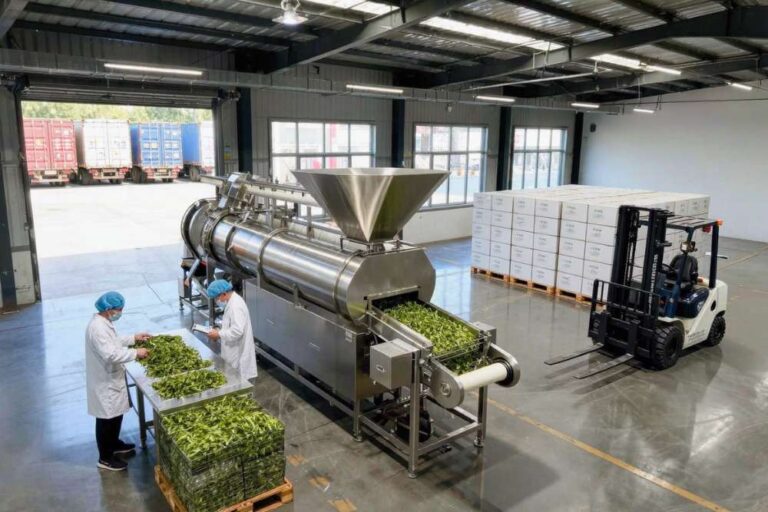
Production capacity is another factor that separates local producers from a true tea exporter. A factory may produce excellent tea in small batches but lack the scaled processing lines, storage capacity, or workforce needed to fulfill consistent, large-volume international orders. Buyers relying on a supplier that cannot maintain steady output risk stockouts and missed delivery windows once demand increases, which can damage relationships with overseas retailers and distributors.
Packaging compliance rounds out the picture of export readiness. Packaging must be adapted to the destination market, accounting for differences in labeling language, ingredient disclosure requirements, weight and measurement units, and shelf-life standards across regions. Buyers evaluating a potential supplier should assess all of these factors together, since a factory strong in one area but weak in another can still create significant risk for a long-term export relationship.