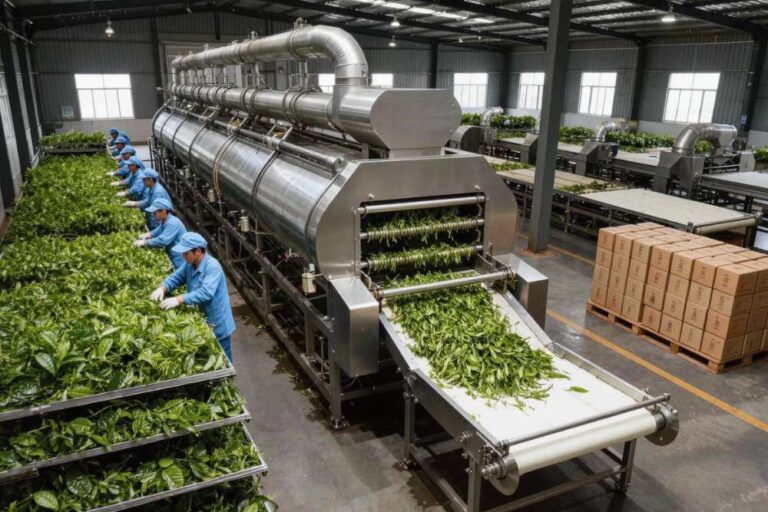
Many businesses decide to switch tea suppliers after spotting a lower price per kilogram, assuming the move will be a simple upgrade to the bottom line. In reality, changing tea suppliers is rarely just a pricing decision. Tea sourcing involves far more than a purchase order and a shipping date; it touches product formulation, packaging compliance, customer perception, and supply chain logistics all at once. Buyers who treat supplier changes as a purely transactional swap often discover that the true cost of the switch shows up weeks or months later, in ways that are harder to trace back to the original decision.
One of the first areas affected is the product itself. Every tea supplier has its own sourcing regions, blending ratios, and processing methods, which means even a “similar” tea leaf can produce a noticeably different cup. A private label tea supplier switch can quietly alter the aroma, strength, or aftertaste of a product that customers have grown used to. For a beverage that consumers often develop strong routine attachments to, even minor reformulation can lead to a wave of complaints or quiet drop-offs in repeat purchases, long before anyone links the issue back to a supplier change.
Packaging and compliance are another overlooked cost center. New suppliers may use different labeling formats, ingredient disclosures, or packaging materials that require regulatory review before products can go back on shelves. This is especially relevant for teas sold across multiple regions, where compliance standards vary and even small formatting errors can delay a launch. Businesses that fail to budget time and resources for this step often find themselves absorbing costs from repackaging runs, compliance corrections, or delayed retail placements.
Consumer trust is harder to quantify but arguably the most expensive casualty of a poorly managed supplier transition. Tea buyers, particularly repeat customers, tend to notice inconsistency faster than most other product categories because taste is such a direct sensory experience. A shift in flavor profile, combined with inconsistent shipping timelines during the transition period, can erode the trust that took years to build. Once customers start second-guessing product consistency, winning back their loyalty typically costs more in marketing and discounting than what was originally saved by switching suppliers.
None of this means that changing suppliers is always a mistake. There are legitimate cases where switching makes sense, such as a current supplier consistently failing to meet delivery timelines, quality control issues becoming unmanageable, or a business scaling to volumes the existing supplier can no longer support. The key difference lies in how the transition is managed. Companies that succeed in tea procurement transitions typically run parallel testing, phase in new suppliers gradually, and communicate changes proactively with customers when reformulation is expected. Approached this way, a supplier change becomes a calculated business decision rather than a reactive one driven solely by price.