The cup you use affects how tea tastes more than most people realise. Scientists have found that the material, weight, and even the colour of a vessel change how we perceive flavour. This happens because the brain processes taste using all the senses at once, not just the tongue. What your hands feel and your eyes see is feeding information to your brain at the same time as you are drinking. The result is that the same tea can taste noticeably different depending on what it is served in.
Glass does not add anything to the flavour of tea because it is chemically neutral. The main issue with glass is that it loses heat quickly, so tea cools faster than it would in other materials. Temperature directly affects how aroma is released, and aroma is a large part of how we taste. As the tea cools faster in glass, those aromatic qualities fade sooner. Glass also lets you see the full colour of the tea, and research shows that a lighter looking liquid is often perceived as more delicate and less full in body.
Ceramic retains heat better than glass because it is denser and slower to conduct temperature. This keeps the tea warmer for longer and allows flavour to develop more steadily as you drink. Unglazed or roughly glazed ceramics can also absorb small amounts of compound from repeated use, which is why traditional clay teapots are said to improve with age. The weight of a ceramic cup also matters. Studies have found that heavier cups make drinks taste stronger and more intense, even when the liquid is identical.
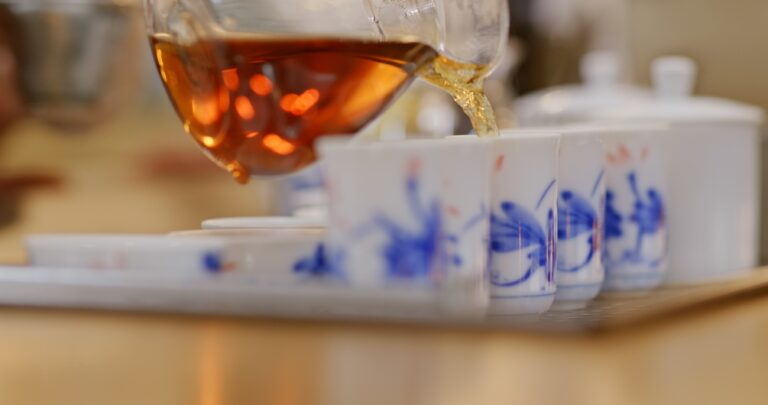
Porcelain is non porous like glass, meaning it does not absorb or release anything into the tea. It holds heat better than glass though, so the flavour stays more stable throughout the drink. One detail worth knowing is that fine porcelain cups tend to have thin rims, and this actually directs the liquid to the front of the tongue first where sweetness is detected. This is why the same tea can taste slightly sweeter and cleaner from a thin porcelain cup compared to a thick mug. It is also why professional tea tasters almost always use white porcelain cups.
The practical takeaway is simple. Use glass when you want to see the tea clearly, such as checking its colour or strength. Use ceramic for bold, roasted, or full bodied teas where warmth and intensity are the goal. Use porcelain for delicate or high quality teas where you want to taste every detail accurately. None of the three is the best option in every situation. Knowing what each material does gives you the ability to choose the right cup for the right tea.