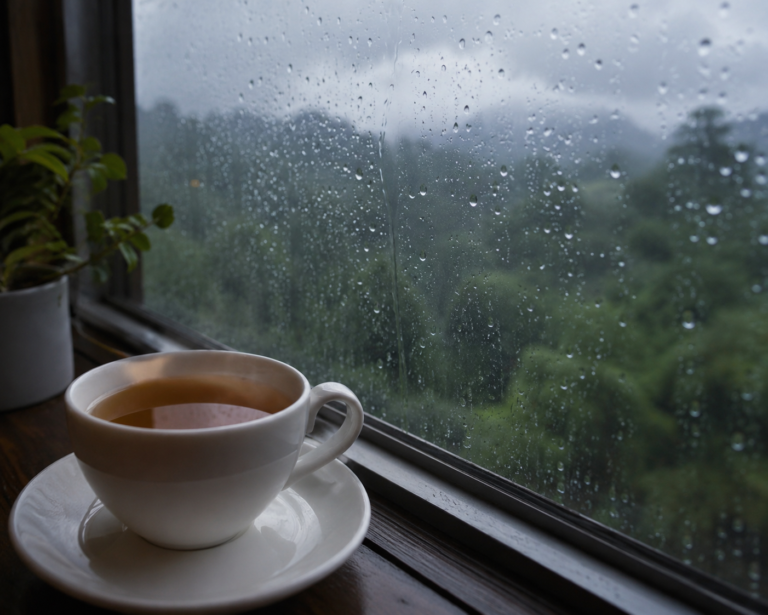
Sri Lanka’s monsoon season runs in two cycles, the southwest monsoon (May to September) affecting the western, southern, and central regions, and the northeast monsoon (October to January) hitting the north and east. During these periods, humidity is high, temperatures drop slightly, and the body’s needs shift. Tea, which Sri Lanka produces in abundance across its seven main growing regions, responds well to these conditions, both in how it is grown and how it should be consumed.
Black tea from Nuwara Eliya is particularly well-suited to cooler, wet days. Grown at elevations above 6,000 feet, Nuwara Eliya teas are light-bodied with a brisk, almost floral character. During the monsoon, when the air is damp and cool, a hot cup of high-grown Ceylon black tea helps maintain body warmth without the heaviness of a milk-laden brew. It also contains theaflavins and thearubigins, antioxidants that support immune function, which is relevant during a season when colds and respiratory issues are more common.
Ginger-infused Ceylon tea is a practical choice during the wetter months. Adding fresh ginger to a mid-grown Ceylon black tea, from regions like Kandy or Dimbula, produces a cup that addresses several monsoon-specific concerns: ginger has documented anti-inflammatory and antimicrobial properties, helps with digestion, and provides warmth from within. This combination is widely consumed in Sri Lankan households during rainy periods and is backed by both traditional use and modern nutritional research. It requires no additives beyond the ginger itself.
Ceylon green tea is worth considering for its lighter impact on the system. Unlike black tea, green tea from Sri Lanka is minimally oxidized, preserving higher levels of catechins such as EGCG. During the monsoon, when physical activity often decreases and appetite can fluctuate, green tea provides a low-caffeine option that supports metabolism without overstimulating the digestive system. Sri Lanka produces limited but high-quality green tea, particularly from the Uva and Kandy regions, and it is increasingly available through specialty tea retailers and online platforms.
Uva region teas, harvested during the dry spell within the monsoon cycle, carry a distinct seasonal quality. The Uva district experiences a unique weather phenomenon between July and September, dry, gusty winds create stress on the tea leaves that produces a characteristic sharpness and menthol-like note, known as the “Uva flavour.” This makes Uva teas one of the more distinctive choices to drink during the tail end of the southwest monsoon. They are assertive enough to cut through the dampness in the atmosphere and pair well with traditional Sri Lankan snacks commonly eaten during rainy evenings, such as isso vadai or plain biscuits. Seeking out a single-estate Uva tea during this window is worthwhile for anyone interested in tasting Ceylon tea at a regionally specific peak.