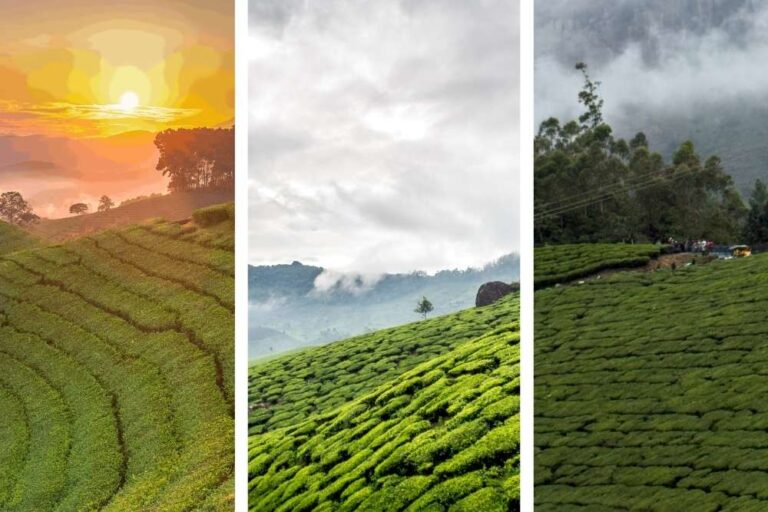
Ceylon tea is harvested year-round, which distinguishes it from some other major tea origins like Darjeeling, where production is more clearly seasonal. However, year-round harvesting does not mean consistent quality throughout the year. Each of Sri Lanka’s main tea-growing districts has a peak quality period, a window of weeks during which specific climatic conditions produce tea with noticeably superior flavor, aroma, and character. These peak periods are driven primarily by dry seasons, which slow the growth of the tea plant and concentrate flavor compounds in the leaf. The two districts with the most well-defined and internationally recognized quality seasons are Uva and Nuwara Eliya, and buyers who are specifically seeking the best expression of Ceylon tea from either origin need to pay attention to when the tea was harvested.
The Nuwara Eliya quality season falls between January and March, during the dry inter-monsoon period that affects the district’s high-altitude gardens. At elevations approaching 2,000 meters, the combination of cool temperatures, low humidity, and reduced rainfall during this window produces a tea that is particularly light, fragrant, and delicate, characteristics that are less pronounced in Nuwara Eliya teas harvested outside this period. The Uva quality season is different, occurring between July and September on the eastern slopes of the central mountains. During this period, a dry wind known locally as the Cachan wind reduces humidity significantly and causes a slight withering effect on the growing leaves, which concentrates specific volatile compounds responsible for the sharp, distinctive fragrance that makes peak-season Uva teas identifiable. Outside of these windows, both districts continue producing tea, but it lacks the intensity and character of the seasonal peak. The terms “first flush” and “second flush,” borrowed directly from the Darjeeling tea lexicon, are sometimes applied to Ceylon tea but are used inconsistently, in Sri Lanka, the more relevant framework is the district-specific quality season rather than a universal first or second harvest cycle.
Whether seasonal Ceylon teas are worth seeking out depends on what the buyer is looking for. For specialty tea buyers, collectors, or anyone purchasing tea to drink without milk and appreciate on its own terms, peak-season teas from Uva or Nuwara Eliya represent a meaningfully different product, not marginally better, but distinctly different in character in ways that are detectable even to a moderately attentive palate. For buyers who drink tea primarily with milk, use it in blends, or value consistency over complexity, seasonality is largely irrelevant because the flavor differences that define peak-season teas are most apparent when the tea is brewed plain. It is also worth noting that the commercial tea trade operates largely on blended, non-seasonal product because the volumes required for consistent retail supply cannot be met by a single district in a single season. Most Ceylon tea sold in supermarkets globally is a blend across districts and harvest periods, which is a deliberate commercial decision rather than a quality compromise.
Buyers who want to purchase genuinely seasonal Ceylon tea need to look for specific information on the label or from the retailer. A harvest date or a seasonal designation such as “July/August Uva” or “January Flush Nuwara Eliya”, is the most reliable indicator that the producer is sourcing and marketing the tea with seasonal precision. Estate name combined with harvest month is the clearest possible signal. Tea sold simply as “Uva” or “Nuwara Eliya” with no date or season reference may have been harvested at any point during the year and is likely not peak-season stock. As with single-origin claims, the presence of specific, verifiable harvest information on packaging is the most practical way for a buyer to distinguish between seasonal tea sold with genuine traceability and seasonal tea used as a loose marketing descriptor.