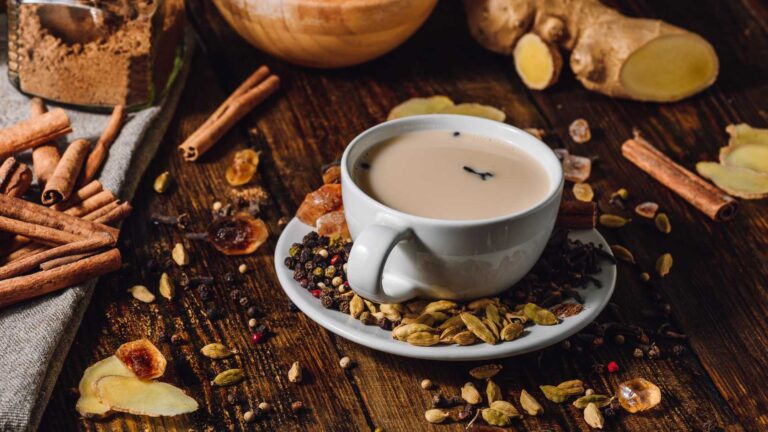
Masala tea, also known as chai, has a rich cultural history rooted in the Indian subcontinent. Its origins can be traced back to the early 20th century, evolving from the Ayurvedic tradition of using spices for medicinal purposes. The blend of black tea, aromatic spices, and milk became a symbol of hospitality and community, deeply ingrained in Indian culture.
Masala tea is a flavorful concoction that brings together black tea leaves with a blend of spices such as cardamom, cinnamon, ginger, cloves, and black pepper. While its nutritional content primarily comes from the black tea leaves, the spices contribute essential oils, antioxidants, and various health benefits. For instance, ginger and cinnamon are known for their anti-inflammatory properties, while cardamom may aid digestion.
Beyond its role as a traditional beverage, masala tea has found culinary versatility. It serves as a base for creative recipes, infusing its warm and aromatic flavors into desserts, baked goods, and even savory dishes. The spice blend’s adaptability allows masala tea to transcend its original form and become a sought-after ingredient in international cuisine.
Masala tea boasts a robust and fragrant aroma, owing to the medley of spices it contains. The infusion process releases the essential oils and volatile compounds from the spices, creating a heady and inviting fragrance. The distinct aroma of masala tea contributes significantly to its allure, providing a sensory experience that goes beyond taste.
Masala tea holds profound cultural significance in India and beyond. It is a cornerstone of Indian daily life, with street vendors and households alike crafting their unique variations. The preparation and sharing of masala tea are rituals that foster connections among people. In Indian households, offering a cup of masala tea is a gesture of warmth and hospitality, and its popularity has transcended borders, making it a globally cherished beverage.