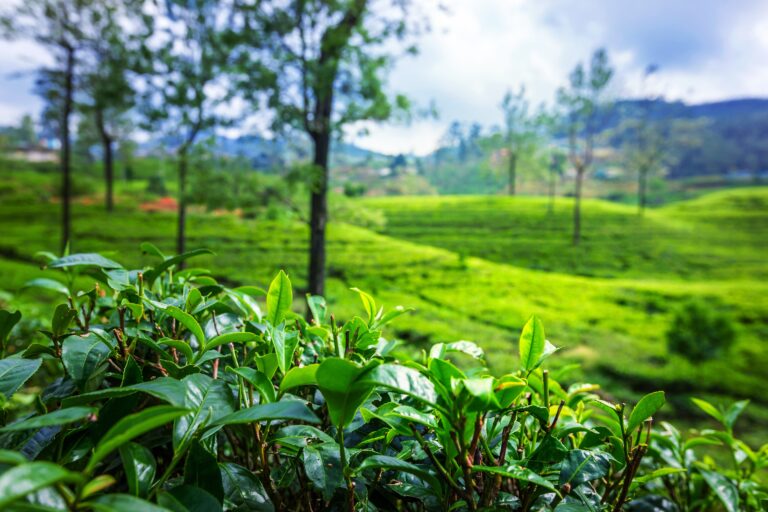
Ceylon tea is classified into three broad elevation categories, low-grown, mid-grown, and high-grown, and each produces tea with measurably different flavor, color, body, and aroma characteristics. The Sri Lanka Tea Board defines low-grown tea as tea cultivated below 600 meters above sea level, mid-grown between 600 and 1,200 meters, and high-grown above 1,200 meters. These are not marketing distinctions, they reflect genuine differences in growing conditions that directly affect the chemistry of the leaf. Temperature, rainfall, humidity, cloud cover, and soil composition all shift significantly as elevation increases, and the tea plant responds to each of those variables in ways that show up clearly in the finished cup. Buyers who understand this classification can make more informed choices based on what they actually want from their tea.
Low-grown Ceylon teas, produced primarily in the Ruhuna and Sabaragamuwa districts in the southern and western parts of Sri Lanka, tend to be bold, dark, and full-bodied. The warm temperatures and high humidity at lower elevations accelerate the growth of the tea plant, resulting in a leaf that is larger, faster-growing, and higher in tannins. When brewed, low-grown teas produce a dark reddish-brown liquor with a strong, robust flavor that holds up well with milk and sugar. They tend to have less delicate aroma than high-grown teas but compensate with strength and depth. This makes them well-suited for everyday drinking, breakfast tea blends, and formats like tea bags where a quick, strong brew is the goal. A significant portion of the global CTC (cut, tear, curl) tea used in commercial blends originates from low-grown Sri Lankan gardens.
Mid-grown teas, primarily from the Kandy district in the central highlands, sit between the two extremes in terms of flavor profile. They produce a medium-bodied liquor with a rich, rounded taste and a color that is typically bright and coppery. Kandy teas are considered highly versatile, strong enough to take milk but flavorful enough to drink plain, and are widely used in blending because of their ability to add body and brightness without overpowering other components. The growing conditions at mid-elevation produce a leaf that develops more slowly than low-grown tea but more quickly than high-grown, resulting in a balance between the tannin-driven strength of Ruhuna teas and the more aromatic qualities of teas grown closer to the cloud line. Mid-grown teas are often underappreciated by specialty tea buyers who tend to focus on the high-grown origins, but they account for a substantial share of Ceylon tea production and are valued highly by blenders worldwide.
High-grown Ceylon teas, particularly those from Nuwara Eliya, Uva, Dimbula, and Uda Pussellawa, are generally considered the most prized in terms of flavor complexity and aroma. At elevations above 1,200 meters, cooler temperatures slow the growth rate of the tea plant significantly, allowing more time for flavor compounds to develop in the leaf. The result is a tea with a lighter, more golden liquor, a brisk and sometimes astringent character, and a pronounced floral or fruity aroma that varies by district. Nuwara Eliya teas, grown at some of the highest elevations in Sri Lanka at around 1,800 to 2,000 meters, are the most delicate — pale in color, light in body, and distinctly aromatic, often described as having a floral or grassy note. Uva teas, grown on the eastern slopes of the central mountains, develop a unique sharpness and fragrance during the dry season that is caused by a specific wind pattern, making Uva one of the most geographically distinctive tea origins in the world.
Elevation also has a practical implication for how a tea should be brewed. High-grown teas are more sensitive to water temperature and steeping time, overbrewing a Nuwara Eliya tea will make it astringent and bitter in a way that masks its more subtle qualities. These teas generally perform best brewed at around 90 to 95 degrees Celsius for two to three minutes. Low-grown teas are considerably more forgiving and can withstand higher temperatures and longer steeping times without significant quality loss, which is part of why they work well in automatic brewing equipment and tea bags. When buying Ceylon tea, checking the label for a district or regional origin, rather than just the generic “Ceylon Tea” designation, gives the buyer the most reliable indication of what elevation the tea was grown at, and therefore what flavor profile and brewing approach to expect.